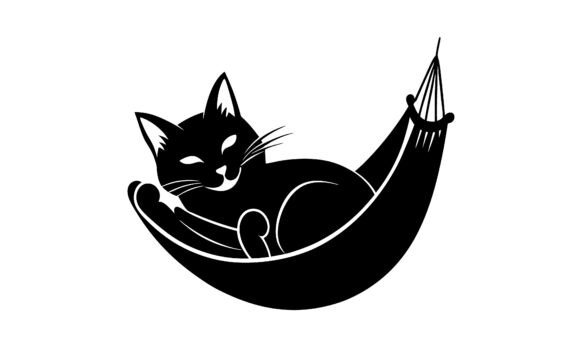
Black Cat Relaxing in Hammock
As someone who’s stitched hundreds of designs across apparel, home goods, and boutique merchandise, I opened Black Cat Relaxing in Hammock expecting charm—and got something more: quiet confidence. It’s not flashy, but it’s unmistakably *designed*. The silhouette is clean, balanced, and full of gentle personality—paws curled, tail draped, ears perked just enough to suggest calm awareness, not sleep. There’s no clutter, no forced whimsy. Just a cat, a hammock, and the kind of stillness that makes people pause mid-scroll on Etsy or smile when unboxing a handmade tote.
I tested it first on a natural linen tea towel—medium-weight, slightly textured, no stretch. Hooped with medium tear-away stabilizer, stitched in matte cotton thread (navy on oat), and the result landed exactly where this design wants to live: thoughtful, tactile, and quietly memorable. It didn’t shout. It invited closer looking. That’s rare in craft graphics—and vital for anything meant to feel handmade, not mass-produced.
A Design That Knows Its Place
Black Cat Relaxing in Hammock isn’t built for high-contrast t-shirt slogans or dense pocket logos. It thrives where breathing room matters: embroidered pillow covers for nurseries, front-of-apron accents for bakeries or florists, baby onesie backs (think soft pastel thread on organic cotton), or minimalist sweatshirt chest placements. I mocked it up on a charcoal crewneck—small hoop, centered just below the collarbone—and it read instantly as intentional, not decorative filler.
It also works beautifully as an embroidered patch. The hammock’s curved lines translate well into satin-stitched edges, and the cat’s outline holds clarity even at 3.5" wide. For Etsy sellers bundling digital embroidery files with printable mockups, this design adds instant warmth to listings—especially alongside “cozy,” “whimsical-but-mature,” or “cat lover gift” keywords. It doesn’t compete with text; it complements tone.
Where It Shines—and Where to Pause
This design performs reliably on stable, medium-to-heavy fabrics: canvas totes, denim jackets, cotton aprons, twill caps (front panel only), and woven kitchen towels. On those surfaces, stitch density feels even, corners stay crisp, and the hammock’s subtle curve reads as intentional shaping—not distortion.
But here’s what I watched closely:
- Small hoop sizes (under 4"): The hammock’s support ropes and cat’s ear details shrink fast. At 2.75", the ear loses definition. Test before committing to tiny cap fronts or baby bibs.
- Stretchy or thin fabrics: Knits and lightweight voiles need cut-away + topping. Without it, the hammock’s horizontal lines can pucker or float. Not a flaw—just a requirement.
- Dark or textured backgrounds: On black terry cloth towels or nubby bouclé blankets, use a light thread (cream, pale gray) and consider adding a subtle underlay stitch in your embroidery software—this isn’t in the file, but it’s worth the 90 seconds.
- Curved surfaces (like baseball caps): The hammock’s gentle arc adapts well—but avoid placing it near the bill seam. Center it cleanly on the front panel, and keep it under 4" wide for consistent tension.
What It Adds to Your Finished Product
Let’s be real: customers don’t buy stitches. They buy feeling. Black Cat Relaxing in Hammock delivers subtle emotional resonance—comfort, quiet joy, a wink of feline independence. That translates directly to perceived value. A $32 embroidered pillow cover feels like a curated piece, not a craft fair afterthought. A personalized baby blanket with this design stitched in soft ecru thread reads as heirloom-quality, not “cute but forgettable.”
For small shop owners and Etsy sellers, it strengthens brand consistency when used across product families: same cat motif on tea towels, matching oven mitts, and a limited-run tote bag series. It’s versatile enough to avoid repetition fatigue, yet distinct enough to become a quiet signature.
And yes—it builds trust. When a buyer sees clean stitch transitions, proportional spacing, and no jagged vector artifacts (a common issue with low-res graphics), they subconsciously register professionalism. That matters most in personalized gifts and custom apparel, where expectations run high.
Practical Designer Notes Before You Stitch
This is a graphics file—not a machine embroidery file out of the box. If you’re using it for actual embroidery, convert it thoughtfully:
- Always test on scrap fabric first—especially if pairing with textured or dark materials.
- Check thread color contrast in both daylight and indoor lighting. Navy on charcoal? Gorgeous. But test it.
- Review stitch density in your digitizing software. This design benefits from moderate fill stitch density—not too sparse, not overly dense—especially in the hammock’s weave area.
- Confirm hoop size compatibility. The natural width lands around 3.75–4.25". Adjust scaling only if needed—and recheck detail integrity.
- Inspect small corners: cat’s ear tip, rope ends, hammock edge curves. These are where stitching errors creep in on lower-end machines.
- Mock it up in black and white first. Does the shape hold weight without color? It should.
- Compare light and dark fabric backgrounds side-by-side. This design gains depth on darker substrates but stays legible on light.
- Use appropriate stabilizer: medium tear-away for stable wovens, cut-away + topping for knits or nap fabrics.
- Verify licensing before selling finished items—or reselling the digital file. The listing says it’s for DIY crafts, but commercial embroidery rights aren’t specified. When in doubt, contact the seller.
In short: Black Cat Relaxing in Hammock is a quiet standout in the Crafts category—not because it’s loud, but because it’s resolved. It doesn’t beg for attention. It earns it, stitch by careful stitch.