Black Cat Walking on a Picket Fence
As someone who’s stitched hundreds of designs across apparel, home goods, and boutique merchandise—first for clients, then for my own small shop—I opened Black Cat Walking on a Picket Fence expecting charm. What I found was something more: a quiet, confident little design with real project legs. Not flashy, not fussy—just clean, intentional, and deeply wearable.
A First Impression That Stitches Well
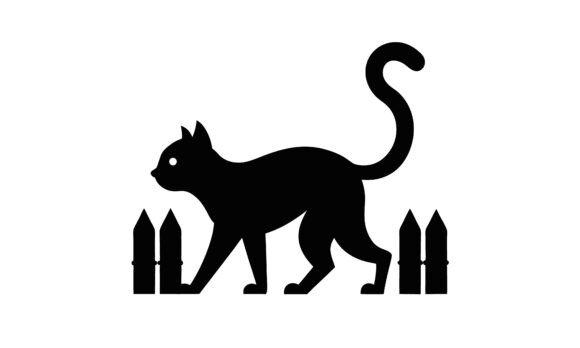
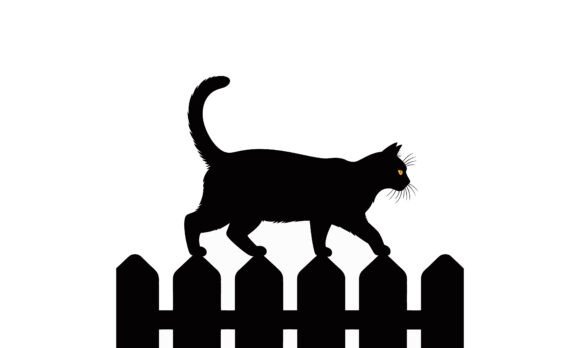
The moment you see Black Cat Walking on a Picket Fence, you feel its rhythm: a relaxed feline mid-stride, balanced atop evenly spaced vertical pickets. It’s not cartoonish or overly stylized—it leans into subtle silhouette elegance. The curve of the cat’s back, the slight tilt of its head, the spacing between fence posts—all suggest thoughtful vector craftsmanship. This isn’t just a graphic; it’s a machine embroidery design waiting to translate cleanly into thread.
I immediately pictured it on a natural linen tea towel for a local gift shop—soft black thread on oat-colored fabric, no fill stitch overload, just crisp satin and running stitch definition. It’s the kind of embroidery file that says “handmade with care,” not “mass-produced clip art.” That matters—especially when your customers are paying a premium for authenticity.
Where It Shines (and Where It Asks for Thought)
Black Cat Walking on a Picket Fence works beautifully on stable, medium-weight fabrics: cotton twill aprons, canvas tote bags, structured baby onesies, and even lightweight sweatshirt fleece. On a custom embroidered tote for a neighborhood cat café? Perfect. The horizontal orientation gives generous real estate for clean hooping, and the open negative space around the fence keeps stitch density manageable—even at 4–5 inches wide.
It’s also a smart choice for personalized gifts. Pair it with a monogrammed corner or a tiny paw print accent, and you’ve got a cohesive, boutique-ready finished product. For Etsy sellers listing handmade nursery decor, this design reads as gentle, whimsical, and gender-neutral—a quiet win in a crowded market.
But—and this is where experience kicks in—Black Cat Walking on a Picket Fence needs thoughtful placement on certain substrates. On thin or stretchy fabric like jersey tees? Use cutaway stabilizer and reduce stitch speed. On dark fabric? Test thread contrast first—matte black thread can disappear on charcoal heather; a soft charcoal gray or deep navy often reads clearer. And avoid tight curves: cap fronts or baseball-style curved panels will compress the fence’s verticals, potentially blurring post spacing. Stick to flat or gently rounded surfaces like pillow covers, front-of-apron placements, or the center chest of a crewneck.
What It Adds to Your Craft Business
For small shop owners and craft business operators, this design quietly lifts perceived value. It doesn’t scream “look at me”—it invites closer looking. That builds trust. A customer scrolling your Etsy shop sees Black Cat Walking on a Picket Fence on a kitchen towel and thinks, “This person understands balance, restraint, and detail.” That impression translates directly to willingness to pay, repeat purchases, and word-of-mouth referrals.
It also scales well across product types. Use it full-size as a custom apparel centerpiece, shrink it to 2.5” for an embroidered patch on a denim jacket, or simplify it further (with your digitizer’s help) for a baby onesie collar accent. Because it’s provided in SVG and EPS formats, it’s flexible for both digital prep and manual digitizing—but remember: SVG and EPS are not embroidery files. You’ll need to digitize it properly for your machine, or work with a trusted digitizer who understands stitch behavior on textured fabrics.
Practical Notes Every Embroidery Designer Should Check
- Test on scrap fabric first—especially if using textured weaves like burlap-blend tea towels or looped terry.
- Review stitch density before stitching large runs. Dense fill areas (like the cat’s body) may need underlay or reduced density on delicate fabrics.
- Confirm hoop size compatibility. At standard scale, this fits comfortably in a 5” x 7” hoop—but always verify your intended size against your machine’s max hoop dimensions.
- Inspect small details: the tip of the cat’s tail and the narrowest fence gaps should hold cleanly. If they feather or vanish in test stitching, adjust pull compensation or reduce density slightly.
- Try black-and-white mockups before finalizing. Does the silhouette hold up without color context? (It does—another strength.)
- Compare light vs. dark fabric backgrounds. The design’s balance relies on contrast—so choose thread colors that enhance, not compete.
- Use appropriate stabilizer: tear-away for stable cottons, cutaway for knits or high-wear items like tote straps.
- Verify licensing before selling finished items or bundling the file digitally. Since it’s labeled for DIY crafts, confirm whether commercial use—including resale of embroidered goods—is permitted.
Final Thought: A Design That Earns Its Place
Black Cat Walking on a Picket Fence won’t dominate a trade show booth—but it will earn repeat orders from customers who appreciate subtlety, craftsmanship, and quiet storytelling. It’s the kind of digital embroidery file that becomes a staple in your library: reliable for holiday embroidery (think Halloween-adjacent but not kitschy), adaptable for baby embroidery (no sharp edges, no clutter), and timeless enough for year-round boutique branding.
If you’re an Etsy seller, a handmade shop owner, or a creative entrepreneur building a recognizable aesthetic, this isn’t just another graphics download. It’s a considered visual asset—one that supports your voice instead of drowning it out. And in the world of Crafts, where attention is scarce and intention is currency, that’s exactly what makes a design worth keeping.