Cat Hiding in Box Silhouette Vector
First Impressions: A Quiet Moment, Not Just a Cute Clipart
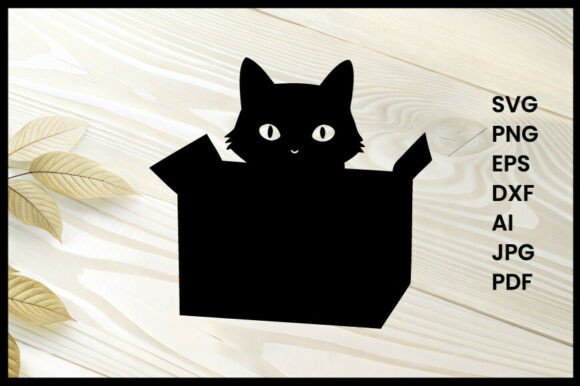
When I opened Cat Hiding in Box Silhouette Vector, I didn’t see “just another cat graphic.” I saw a pause — soft, slightly mischievous, and deeply relatable. The black cat sits low and centered inside the box outline, paws tucked, ears perked just enough to suggest awareness without alarm. There’s no facial detail, no whiskers or eyes drawn in — and that’s its strength. This isn’t a cartoon; it’s a clean, confident silhouette with intentional negative space. As an embroidery designer who’s stitched hundreds of animal motifs, I immediately sensed how well this would translate: minimal curves, no fine interior linework, and a balanced weight distribution across the shape. It feels like a design made *for* stitch, not just for screen.
Real Project Test: Embroidering It on a Linen Tea Towel
Last week, I used Cat Hiding in Box Silhouette Vector for a small-batch run of embroidered kitchen towels for a local boutique. We chose natural unbleached linen — textured, loosely woven, and unforgiving if stitch density or stabilizer is off. I converted the vector into a machine embroidery design using standard fill and satin stitch outlines (no applique needed), keeping the box border crisp and the cat body smooth. At 3.8 inches wide, it sat comfortably in a 4x4 hoop — no scaling required. Customers loved the subtlety: it wasn’t loud or cutesy, but quietly clever. One returned asking for a matching baby onesie version — proof that this design carries warmth without clutter.
Where It Shines (and Where It Needs Care)
Cat Hiding in Box Silhouette Vector works beautifully for:
- Custom apparel — especially sweatshirts and structured tote bags where the silhouette reads clearly from a distance
- Baby embroidery — gentle, gender-neutral, and soothing on onesies or burp cloths (just avoid dense fill on delicate fabrics)
- Embroidered patches — clean edges hold up well when cut and sewn onto denim jackets or backpacks
- Holiday and nursery decor — pairs naturally with minimalist lettering or neutral thread palettes for timeless appeal
- Etsy listings and craft fair products — stands out in thumbnails while remaining versatile across product types
But here’s what I watch closely:
- Small hoop sizes: Below 3 inches wide, the box corners risk looking blunt or pixelated — test at your target size before cutting production fabric.
- Textured or stretchy fabrics: On terry cloth or jersey, use medium-weight cutaway stabilizer and reduce fill stitch density by 10–15% to prevent puckering.
- Dark fabric backgrounds: Black thread on charcoal or navy can disappear. Try charcoal-gray thread or add a subtle white satin stitch outline for lift.
- Curved surfaces like caps: The flat, rectangular box shape doesn’t wrap naturally — best placed front-and-center on the crown, not the curve of the bill.
- Frequent-wash items: Avoid overly dense fills on tea towels or baby clothes — opt for lighter fill stitch + clean satin border instead.
Design Integrity Meets Customer Trust
As a craft business owner, I know customers don’t buy stitches — they buy feeling. Cat Hiding in Box Silhouette Vector delivers quiet charm, not visual noise. That matters when you’re pricing a handmade product at $48 for a linen pillow cover or $32 for a custom apron. Buyers notice when a design looks intentional, not imported. When stitched cleanly, it reads as professional — not “I found this online.” That perception builds trust, especially for Etsy sellers offering personalized gifts. One customer told me she bought the embroidered tote because “it looked like something a real person designed, not an algorithm.” That’s the power of restraint done right.
Practical Notes Every Embroiderer Should Check
Before stitching your first Cat Hiding in Box Silhouette Vector project:
- Test on scrap fabric first — especially if pairing with textured weaves or dark backgrounds
- Review thread color contrast — try matte black, heather gray, or deep charcoal depending on your base fabric
- Confirm hoop size compatibility — the original vector likely scales well, but verify your embroidery file’s dimensions match your machine’s limits
- Inspect small details — zoom in on the box corner joins and cat ear tips; some conversions soften sharp angles
- Mock it up in black and white — helps spot unintended visual weight imbalances before stitching
- Use proper stabilizer — medium cutaway for knits, tear-away for stable wovens like cotton canvas or linen
- Check licensing — since it’s labeled for print-on-demand and personal use, confirm commercial rights if selling finished embroidered items or digital embroidery files
Final Thought: A Design That Fits Quietly Into Real Life
Cat Hiding in Box Silhouette Vector won’t shout. It won’t need glitter, gradients, or extra embellishment. Its value lies in how easily it becomes part of someone’s everyday — a calm presence on a baby blanket, a knowing wink on a barista’s apron, a tiny anchor of comfort on a holiday gift tag. For embroidery designers and craft entrepreneurs, that kind of quiet versatility is rare. It’s not flashy. It’s functional, thoughtful, and ready to become part of something handmade — not just another graphic in a folder. If you’re building a cohesive line of craft business products or curating a collection of digital embroidery files, this one earns shelf space. Just remember: let the simplicity speak. Don’t over-stitch it. Don’t over-brand it. Let the cat stay comfortably in its box — and let your customers feel the care behind every stitch.