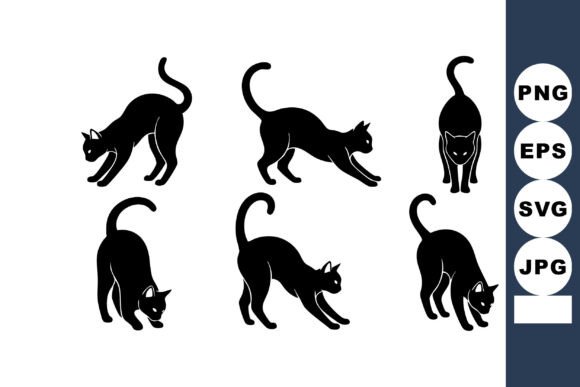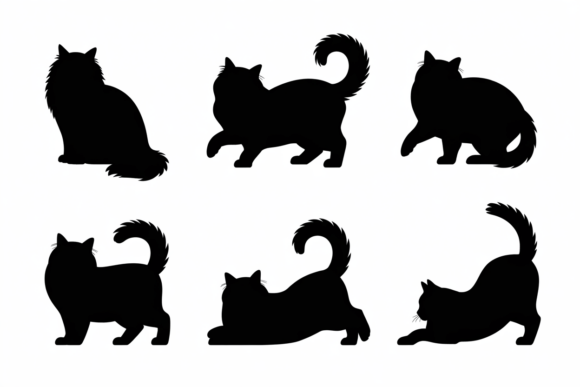
Cat Silhouettes in Different Poses
A Designer’s First Look: Clean, Playful, and Surprisingly Versatile
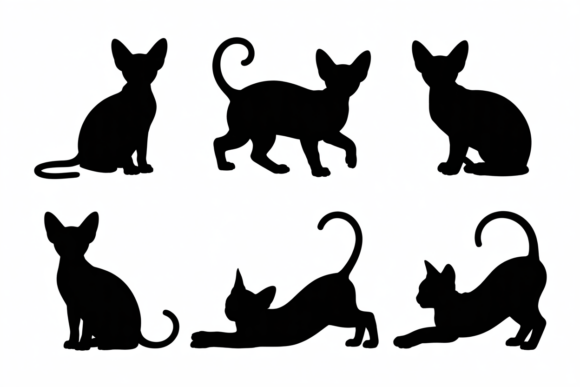
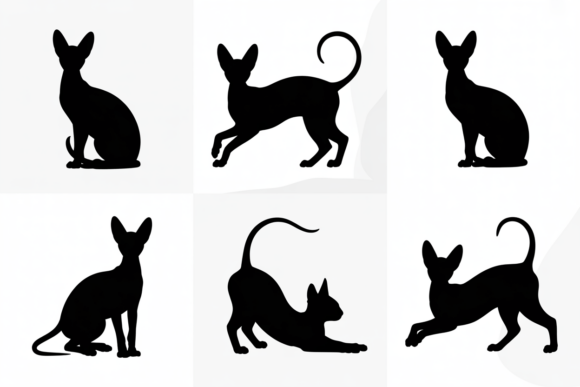
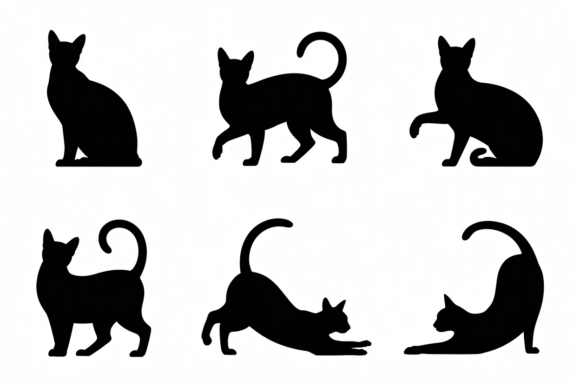
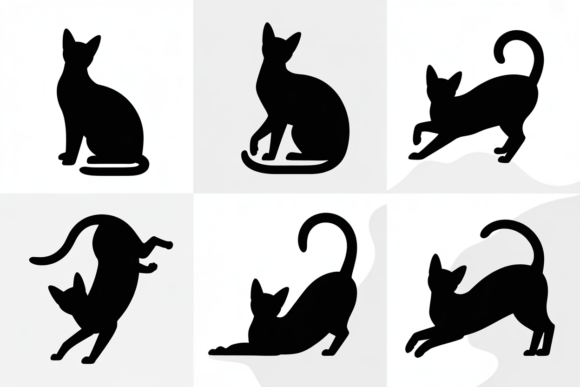
When I opened Cat Silhouettes in Different Poses, my first thought wasn’t “cute”—it was “usable.” As someone who tests dozens of embroidery files a month for client work and small-batch production, I appreciate how rare it is to find a silhouette-based design that balances charm with technical readiness. These aren’t cartoon cats or overly stylized illustrations; they’re confident, fluid outlines—each pose distinct (curled, stretching, sitting upright, mid-pounce) but unified by consistent line weight and thoughtful negative space. The mood is warm and approachable without leaning into kitsch. That makes Cat Silhouettes in Different Poses feel like a design asset, not just a decorative clipart add-on.
Real-World Test: A Custom Embroidered Tote for a Local Pet Boutique
Last week, I used three of the silhouettes to create a limited-run embroidered tote for a neighborhood pet boutique launching their “Adopt & Celebrate” campaign. We chose a natural canvas tote—medium-weight, slightly textured—and stitched one cat per side: a curled pose on the front, a standing silhouette on the back, and a subtle running-stitch outline version along the bottom hem as a repeating motif. The result? Customers paused, smiled, and asked where the design came from—not because it screamed “embroidery,” but because it looked intentional, handmade, and quietly sophisticated. That’s the sweet spot Cat Silhouettes in Different Poses hits: it supports storytelling without overwhelming the product.
Where It Shines (and Where It Needs Thought)
This isn’t a one-size-fits-all embroidery file—but that’s a strength, not a limitation. Here’s how it performs across real applications:
- Custom apparel: Works beautifully on sweatshirts and structured tees—especially when placed on the chest or sleeve. The clean outlines hold up well at 3–4 inches wide. Avoid cramming more than two poses into a single hoop unless you’re using a large-format machine.
- Baby embroidery: The sitting and curled poses translate perfectly to onesies and burp cloths. Their simplicity reads clearly even at 2.5 inches tall—no risk of tiny details vanishing in stitching.
- Embroidered patch: Ideal for iron-on or sew-on patches. The defined edges make clean cut lines easy, and the lack of internal detail means less stabilizer bulk under the patch backing.
- Tote bag design & kitchen towel: Excellent for medium-to-large placements where visual rhythm matters. Try spacing three poses diagonally across a tea towel—it reads as cohesive, not repetitive.
- Holiday embroidery & personalized gift: Pair the pouncing pose with a simple “Meow-mas” text block for playful holiday tags or stocking stuffers. Its warmth lands better than generic snowflakes or trees for pet-loving families.
Use With Care: Practical Boundaries
Like any strong design, Cat Silhouettes in Different Poses has contexts where it needs extra attention:
- Small hoop sizes (<4" diameter): The stretched or pouncing poses lose nuance below 2 inches. Stick to the curled or seated versions if your hoop is tight.
- Textured or stretchy fabric: On fleece or ribbed knit, use a firm cutaway stabilizer and reduce stitch density slightly—those smooth curves can distort if tension isn’t dialed in.
- Dark fabric: Satin stitch outlines pop best with high-contrast thread (e.g., cream on navy). Running stitch versions read more softly—great for subtlety, less so for shelf impact.
- Curved surfaces (caps, hats): The seated and curled poses adapt more easily than the long, horizontal stretch pose. Always test on a cap blank first—the crown curve compresses width.
- Frequent-wash items (baby blankets, kitchen towels): Opt for dense fill stitch over satin for durability. Running stitch versions are best reserved for decorative accents—not primary motifs on high-use items.
What It Adds to Your Finished Product—Beyond Aesthetics
Using Cat Silhouettes in Different Poses subtly elevates perceived value. Because the shapes are balanced and intentional—not crowded, not fussy—they communicate care and craft. Customers notice that. For Etsy sellers and small shop owners, that translates to stronger buyer engagement: fewer “Is this hand-drawn?” questions, more “I need this in every color.” For commercial embroidery shops, it’s a reliable go-to for pet-themed branding—consistent enough for logo lockups, flexible enough for seasonal variations. And for designers building digital product bundles, these silhouettes pair cleanly with minimalist fonts, neutral palettes, and other scalable graphics—making them smart design assets, not just standalone files.
Designer Notes You’ll Actually Use
Before stitching your first project:
- Test the machine embroidery design on scrap fabric matching your final substrate—especially for texture and stretch.
- Check thread color contrast in both natural and artificial light; what reads well on screen may fade on dark denim.
- Review stitch density: If your software shows heavy fill areas, consider simplifying to outline + light fill for breathability on baby items.
- Confirm hoop size compatibility—some poses extend beyond standard 4×4 boundaries.
- Inspect small corners and tail tips: Do they stitch cleanly, or do they feather or skip? Adjust jump stitches if needed.
- Try black-and-white mockups—this design relies on shape, not shading, so grayscale previews reveal clarity issues fast.
- Compare performance on light vs. dark fabric backgrounds. Some poses gain presence on contrast; others soften intentionally.
- Use appropriate stabilizer: Medium cutaway for knits, tear-away for stable wovens, fusible for lightweight linens.
- Verify licensing: Since this is a digital embroidery file marketed for DIY crafts, confirm whether commercial use (e.g., selling finished embroidered totes) is permitted before listing on Etsy or at craft fairs.
Final Thought: A Quietly Confident Design Choice
Cat Silhouettes in Different Poses won’t shout from a shelf—but it will earn repeat customers, spark genuine smiles, and hold up across seasons, fabrics, and business models. It’s the kind of crafts graphic that feels like it belongs in your permanent library: not trendy, not dated, just right. Whether you’re stitching a single personalized gift or scaling a boutique line of pet-themed goods, this is a graphics set that works *with* your process—not against it.