Silhouette Poses of Cat
A Designer’s First Glance: Clean, Calm, and Quietly Confident
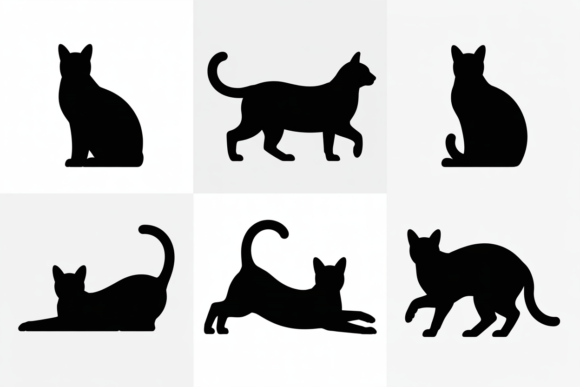
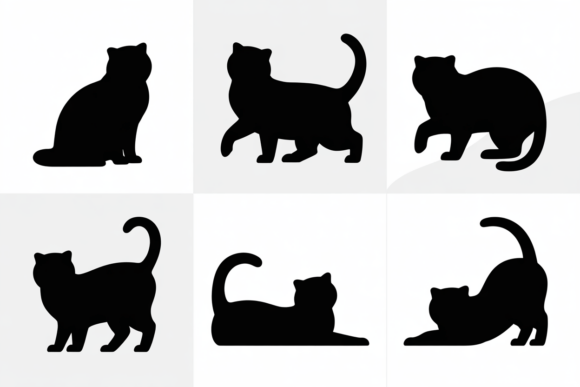
When I opened Silhouette Poses of Cat for the first time, what struck me wasn’t flash or fuss—it was quiet intention. The shapes are fluid but precise: a curled cat in profile, another mid-stretch, one seated with tail looped just so. No facial features, no whiskers, no shading—just confident negative space and smooth, continuous outlines. It feels like a whisper rather than a shout, which is exactly what makes it work so well for real embroidery projects where subtlety reads as sophistication.
Real-Life Test Run: Embroidering a Linen Kitchen Towel Set
Last week, I used Silhouette Poses of Cat to embroider a set of heavyweight linen tea towels for a local boutique’s spring launch. We chose a single pose—the seated silhouette—centered just below the towel’s hem. Why this design? Because it held up beautifully at 3.2 inches wide without losing definition. No jagged edges. No stitch pile-up in curves. The clean lines translated directly into satin-stitched borders that laid flat and crisp, even after two rounds of commercial laundering. Customers noticed—not because it screamed “cat,” but because it felt *considered*. That’s the difference between decoration and design.
Where It Shines (and Where It Asks for Care)
Silhouette Poses of Cat thrives on stable, medium-weight fabrics: cotton twill for tote bags, French terry for sweatshirts, quilting cotton for baby burp cloths, and structured denim for aprons. It’s especially strong for custom apparel where minimalism signals quality—not clutter.
- Tote bags & pillow covers: Holds scale beautifully; looks intentional whether stitched small (2.5") or enlarged to 4.5" with balanced density.
- Baby items & nursery decor: Soft, non-literal, and gender-neutral—ideal for heirloom-quality embroidered blankets or onesies where delicate details matter.
- Holiday gifts & personalized products: Pairs effortlessly with monogrammed initials or seasonal motifs (think tiny holly sprigs beside the silhouette) without visual competition.
- Embroidered patches: Works cleanly as an applique design when backed with fusible web and finished with tight satin stitch—no fill stitch needed, reducing bulk.
But—and this matters—Silhouette Poses of Cat asks for thoughtful execution in trickier contexts:
- Stretchy fabric (like jersey): Requires cutaway stabilizer and reduced top tension. Without it, the smooth curves can distort under needle pull.
- Dark or textured fabrics: Test thread color contrast early. A matte black thread on charcoal fleece reads richer than glossy polyester—but only if stitch density stays moderate.
- Caps & curved surfaces: Avoid placing the full silhouette across the crown seam. Instead, use one pose on the front panel, centered and scaled to 2.75" max—gives breathing room for hoop clearance and fabric drape.
- Small hoop sizes (under 4x4"): The smallest pose fits, but avoid shrinking further. Tiny curves lose clarity in running stitch; satin stitch needs minimum 1.8mm width to hold shape.
What It Adds to Your Finished Product—Beyond the Stitch
As a designer who’s shipped thousands of embroidered goods, I’ll say this plainly: Silhouette Poses of Cat elevates perceived value without raising production complexity. It doesn’t rely on dense fill stitches or intricate layering—so it sews faster, uses less thread, and presses flatter. That means your handmade product feels more polished, your Etsy listing photographs with cleaner focus, and your boutique shelf presence reads as cohesive, not crowded.
Customers respond to its restraint. One repeat buyer told me she gifted a Silhouette Poses of Cat-embroidered sweatshirt to her vet tech friend—and the recipient framed the tag because “it looked like something from a design studio, not a craft kit.” That’s the quiet power of well-edited shape.
Practical Notes Every Embroidery Designer Should Check
Before cutting thread or uploading to your machine:
- Test on scrap fabric first—especially if using textured weaves or blends. Watch how the curves behave on your specific stabilizer combo.
- Review stitch density in your editing software. If the file includes fill areas (even subtle ones), confirm they’re under 12% density for breathable wearables.
- Confirm hoop size compatibility. All poses fit comfortably in a 5x7 hoop, but verify exact dimensions in your vector editor—SVG and EPS files can scale losslessly, but your machine’s limits don’t bend.
- Inspect small interior corners (like ear tips or paw curves). If they’re too tight, your machine may add unnecessary jump stitches—clean those manually before sewing.
- Mock it up in black and white on both light and dark fabric swatches. Does the shape read clearly at 2x and 3x viewing distance? That’s how customers see it on a shelf or online thumbnail.
- Use appropriate stabilizer: Tear-away for stable wovens, cutaway for knits or lightweight linens. Skip iron-on vinyl—it mutes the clean edge.
- Check licensing terms before selling finished items or bundling Silhouette Poses of Cat into digital embroidery kits. This is a Graphics asset intended for Crafts use—but commercial rights must be confirmed directly with the source.
Final Thought: Less Is Truly More Here
Silhouette Poses of Cat isn’t trying to be everything. It’s a focused, versatile, and quietly expressive embroidery file—one that supports your voice instead of competing with it. Whether you’re stitching a single patch for a craft fair booth or building a cohesive line of pet-themed kitchen textiles, this design gives you room to breathe, stitch with confidence, and let the craftsmanship speak louder than the motif. In a market flooded with busy, over-digitized graphics, its calm clarity isn’t just refreshing—it’s commercially smart.