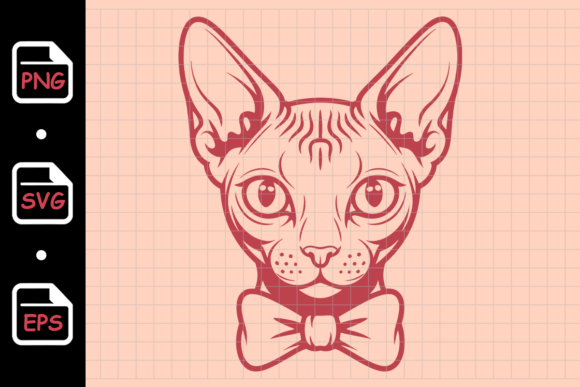
Sphynx Cat Portrait with Bow Tie Vintage
First Impressions: Charm, Character, and Clear Intent
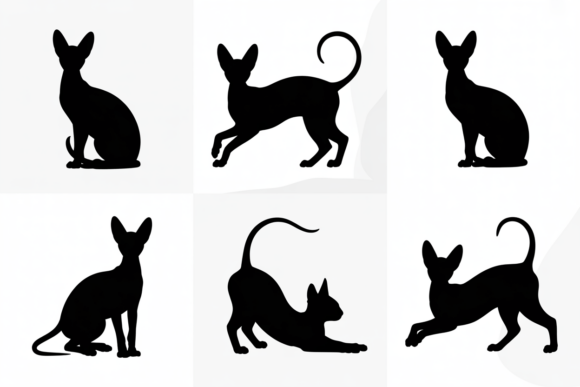
Opening the Sphynx Cat Portrait with Bow Tie Vintage files, I immediately noticed its confident silhouette and expressive minimalism. This isn’t a cartoonish or overly stylized cat—it’s a refined, slightly whimsical portrait that leans into vintage charm without sacrificing clarity. The bow tie adds just enough personality to feel intentional, not gimmicky. As an embroidery designer who’s stitched hundreds of animal motifs, I appreciate how the composition avoids fussy detail while still reading as distinctly *Sphynx*: lean lines, prominent ears, and that knowing, quiet gaze. It feels tailor-made for a handmade product where subtlety and character matter more than flash.
A Real Project Test: Embroidering a Linen Tote for a Local Boutique
Last week, I prepped this design for a custom linen tote bag—part of a small-batch collection for a neighborhood gift shop. The fabric was medium-weight natural linen, slightly textured but stable. I used a 4” hoop and medium-weight cutaway stabilizer. What stood out wasn’t just how cleanly the outline held, but how well the negative space worked: the transparent PNG made mockup prep effortless, and the SVG scaled perfectly for my digitizing software when I needed to adjust stitch path order. On the finished tote, the Sphynx Cat Portrait with Bow Tie Vintage landed with quiet confidence—recognizable at a glance, elegant up close, and unmistakably handmade.
Where It Shines (and Where to Pause)
This embroidery file excels in projects where charm and clarity go hand-in-hand:
- Custom apparel: Works beautifully on sweatshirts and structured tees—especially chest or sleeve placements where the bow tie reads as intentional detail, not clutter.
- Tote bag design and aprons: Its balanced proportions fill a 3.5–4.5” hoop naturally, making it ideal for center-front stitching on canvas or linen.
- Baby embroidery and nursery decor: The gentle vintage tone feels warm and timeless—not too cutesy, not too stark—ideal for onesies, pillow covers, or tea towels meant to last beyond infancy.
- Embroidered patch and holiday embroidery: Clean edges and moderate detail mean it stitches reliably as a sew-on patch or standalone motif on stockings, ornaments, or gift tags.
That said, I’d approach certain applications thoughtfully:
- Thin or stretchy fabric: Avoid lightweight knits without proper stabilizer—those delicate ear tips and bow tie corners can distort if tension isn’t dialed in.
- Curved surfaces like caps: While the shape is compact, test first on scrap cap fabric—the slight curve can compress fine details near the chin or bow knot.
- Dense stitch areas: Though not overly complex, the bow tie’s satin stitch zones benefit from moderate stitch density; overloading them risks thread buildup on low-pile fabrics like fleece.
- Dark fabric backgrounds: The design’s contrast relies on clean outlines. Use bright white or ecru thread—or consider a subtle underlay—to ensure definition against charcoal or navy.
What It Adds to Your Craft Business—and What It Doesn’t Promise
As an Etsy seller and small shop product developer, I look for designs that elevate perceived value without demanding expert-level execution. The Sphynx Cat Portrait with Bow Tie Vintage does exactly that. It reads as intentional, curated, and commercially viable—ideal for branding a line of pet-themed kitchen linens or personalized baby gifts. Customers notice the restraint: no excessive fill stitch, no tiny lettering to misfire, no gradients that don’t translate to thread. That builds trust. It says, “This was chosen, not slapped on.”
But let’s be clear: it won’t magically fix poor hooping, weak stabilizer choice, or mismatched thread colors. Its strength lies in its honesty—it’s a focused, well-proportioned machine embroidery design, not a full-color digital illustration pretending to stitch well. If you’re selling finished products, that authenticity resonates. If you’re listing it as a digital embroidery file on Etsy, its clean vector roots (SVG + EPS) and 300 DPI PNG make it easy to showcase in printable mockups—no pixelation, no awkward scaling.
Practical Designer Notes Before You Stitch
- Always test on scrap fabric—especially with textured weaves or blends. Linen, cotton duck, and midweight twill behave very differently.
- Check thread color contrast before committing to dark or light fabric. Try black thread on ivory linen, then ivory thread on charcoal—see which tells the story better.
- Review stitch density in your embroidery software. If filling the bow tie feels heavy, reduce density by 10–15% for breathability on apparel.
- Confirm hoop size compatibility. At standard scale, it fits comfortably in a 4” hoop—but verify before resizing for a 3” cap hoop or 5” tote placement.
- Inspect small details like the inner ear contour and bow knot symmetry. These define the design’s polish.
- Test black-and-white mockups to gauge visual weight—this helps predict how it’ll read on varied fabric backgrounds.
- Use appropriate stabilizer: cutaway for knits and wearables, tear-away for stable wovens like tea towels or pillow covers.
- Verify licensing before selling finished items or reselling the file. The included formats suggest commercial use, but always confirm scope with the source.
Final Thought: A Design That Earns Its Place
The Sphynx Cat Portrait with Bow Tie Vintage doesn’t shout. It invites. It’s the kind of applique design or standalone motif that makes a customer pause at a craft fair booth, tilt their head, and say, “Oh—I *get* that.” Whether you’re stitching a personalized gift, building a cohesive line of boutique merchandise, or sourcing reliable design assets for your craft business, this one earns its spot—not because it’s flashy, but because it’s thoughtfully built for real-world embroidery, real fabric, and real people who appreciate quiet craftsmanship.